The Artlytical Method®: Changing How We Teach Art, Not Just What Children Draw

A finished picture tells only part of a child's learning story. It may show careful colouring, confident lines or an imaginative idea. What it cannot tell us on its own is how the child arrived there: what they noticed, which decisions they made, where they became stuck, and how they found a way forward. At The Art People, these questions sit at the heart of the Artlytical Method®. Our teaching framework brings technical art practice together with visual thinking, so the lesson is not simply about producing a picture. It is about helping a child become more capable of making, understanding and improving their own work.
What Is the Artlytical Method®?
The Artlytical Method® is The Art People's structured teaching framework built around two interdependent pillars: Art Core and Analytical Core. Art Core develops the practical skills needed to make art. Analytical Core develops the habits of observing, planning, organising and reflecting that help a learner use those skills purposefully. Neither pillar is a substitute for the other.
A child may know how to shade a sphere yet struggle to decide where the light should fall in a larger drawing. Another may imagine an exciting scene but lack the control to put it on paper. In the first case, technique needs direction; in the second, an idea needs tools. Bringing the two pillars together connects what children want to express with what they can actually do.
This is a teaching approach, not an intelligence test, clinical treatment or promise that art lessons will raise academic scores. Its purpose is to make artistic learning more intentional: children practise skills, make visual decisions and learn to explain and revisit those decisions.
Why Art Education Needs to Look Beyond the Finished Picture
When a lesson is judged mainly by the artwork taken home, the easiest achievement to recognise is a polished result. But a beautiful picture can be produced with substantial adult help, while a less polished sketch may contain considerable independent thinking. The product matters, but it is not the whole measure of learning.
Copying a demonstration can be useful. It gives a beginner a visible model of an unfamiliar technique. Open-ended exploration can also be useful: children need room to experiment and discover what materials can do. The difficulty arises when copying becomes the destination, or when freedom is offered without enough guidance for a child to move beyond frustration.
The Artlytical® approach seeks a productive balance. It gives children something specific to learn without prescribing every creative decision. The question changes from 'Does this look like the teacher's example?' to 'What has the child learned to notice, choose and do for themselves?' That shift changes what teachers demonstrate, what they ask and what they praise.
Art Core: Giving Ideas the Tools to Become Visible
Creative intention becomes easier to express when a learner has reliable tools. Pencil pressure affects whether a mark is delicate or forceful. Proportion affects whether an object feels balanced. Colour contrast changes what catches the viewer's attention. These are not merely finishing touches; they shape what an artwork communicates.
Our Art Core describes a progression from pencil control and precision through proportion and structural form, colour theory and application, and finishing and refinement. Learning is cumulative: controlled mark-making supports clear shapes; understanding shapes supports more complex forms; colour and shading help those forms communicate depth and mood.
The point is not to demand adult-level realism from every child. It is to identify an appropriate technical challenge and make it learnable. A young beginner may be working on a controlled curved line. A more experienced learner may be comparing proportions or exploring tonal transitions. Both are developing craft at a level they can meaningfully practise.
- Pencil control: varying pressure, line weight and the direction of a mark.
- Proportion and structure: recognising how parts relate to the whole.
- Colour and shading: using harmony, contrast and tone intentionally.
- Refinement: deciding which details and adjustments improve the work.
Analytical Core: Learning to Think Through an Image
Visual thinking begins with attention. Before drawing a leaf, a learner can look at its outline, the direction of its veins and the way one side differs from the other. This is more precise than drawing a remembered symbol of a leaf. Observation gives the child something concrete to work from and something concrete to check.
Planning then turns observations into choices. How large should the subject be? Where should it sit on the page? What should a viewer notice first? A plan need not be elaborate: a quick thumbnail sketch or a decision about placement can be enough. What matters is that the learner begins to see composition as a choice rather than an accident.
Reflection completes the connection between intention and result. 'Is it good?' invites a broad verdict. 'Which part feels closest to what you intended, and what would you change?' invites useful thinking. Our Analytical Core includes focused observation, compositional planning, critical self-evaluation, and visual deconstruction and reconstruction: breaking a complex subject into understandable parts, then rebuilding it with purpose.
What the Two Pillars Can Look Like in a Lesson
Consider an illustrative lesson about drawing and painting a small potted plant. This is an example of how the framework can be applied, not a report of a particular student's experience or a fixed lesson sequence. The subject is simple enough to observe directly, yet rich enough to raise questions about shape, proportion, colour and arrangement.
First, the learner looks closely. Is the pot wider at the top? Which leaves overlap? Where is the darkest area? The teacher can help the child notice these relationships without drawing the answer for them. Next, the learner tries two small layouts: perhaps a central plant in one and an off-centre plant in the other. Choosing between them makes planning visible.
A short technical demonstration might show how an ellipse describes the pot's opening or how a lighter pencil line makes adjustments easier. The child then applies that technique to their own arrangement. Later, they compare the drawing with the subject and their original intention. If the pot looks tilted, they can check its edges; if the leaves disappear into the background, they can test greater contrast.
The important outcome is not that every plant painting looks identical. It is that the learner has a route through a visual problem: look carefully, make a choice, use a technique, check the result and adjust. Those actions are an illustrative way to connect the two pillars, not additional official pillars of the method.
Why Structure Can Support Creativity Rather Than Restrict It
Structure becomes restrictive when it dictates every answer. It becomes supportive when it gives learners a manageable starting point and the tools to move beyond it. A child who understands how warm and cool colours behave has more ways to express a mood, not fewer. A learner who can construct a basic form has more freedom to invent a creature or object.
The distinction is between teaching a principle and prescribing a picture. A teacher might demonstrate three ways of creating texture, then invite children to decide which serves their subject. The shared learning goal is texture; the creative choices remain open. Technical practice and personal expression can therefore happen in the same lesson.
Nor does analytical thinking mean explaining away the joy of making. Sometimes a child needs time to explore a brush, repeat a satisfying mark or follow an unexpected idea. Questions and demonstrations should support that engagement, not interrupt every moment. A thoughtful framework gives teaching direction while leaving space for discovery.
The Teacher's Role: Guidance Without Taking Over
An adult can quickly improve a child's picture by correcting it directly. That may improve the immediate result, but it can remove the very problem the child needs to learn to solve. A more useful intervention makes the next step clearer while keeping ownership with the learner.
For example, instead of redrawing an oversized eye, a teacher can ask the child to compare its width with the face. Instead of choosing a background colour for them, the teacher can invite two small colour tests. Demonstration remains important, but it should equip the child to act, not turn the teacher into the maker of the child's work.
Support also needs to change with the learner. A beginner may need a short demonstration and one focused question. A more experienced student may be able to compare alternatives and justify a decision. Independence is not achieved by removing all help at once; it develops as the child can take responsibility for more of the process.
How the Framework Applies Across Learning Stages and Media
For younger learners, the connection between hand and eye can be made tangible through manageable marks, simple shapes and colour choices. Reflection might be a conversation about a favourite part of the picture, rather than a formal critique. Expectations should follow the child's developmental readiness, not the sophistication of an adult example.
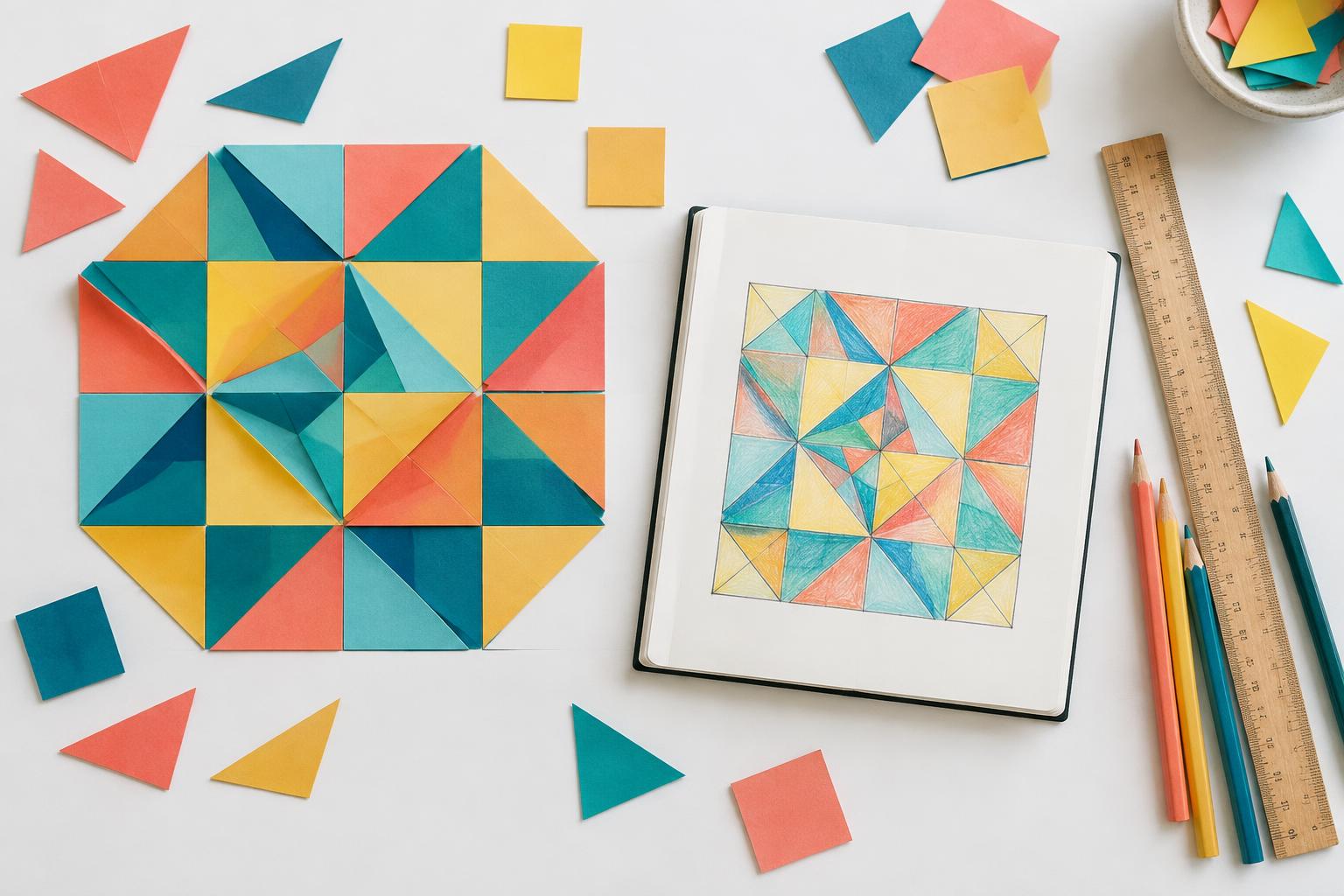
For children building drawing and painting skills, observation and planning can become more deliberate. They can compare proportions, try different compositions and explain how colour supports a subject. For portfolio development, the same questions become especially valuable: what was the intention, which alternatives were explored, and what changed during the process? A collection of finished works becomes more meaningful when the learner understands the decisions behind them.
The underlying connection also applies to digital media. Knowing which tool creates a mark is technical knowledge; deciding why that mark belongs in the image is visual thinking. In 3D work, constructing a form and evaluating its proportions work together. In animation, operating the software and judging whether timing communicates an action are different but connected tasks. The medium changes; the need for craft and judgement remains.
The Wider Educational Ideas Behind Craft and Thinking
Harvard Graduate School of Education's Project Zero describes eight Studio Habits of Mind: Develop Craft, Engage & Persist, Envision, Express, Observe, Reflect, Stretch & Explore, and Understand Art Worlds. Its description focuses on the thinking that teachers intend students to learn while creating. That is an important distinction: learning in art includes both working with materials and developing ways of attending to, imagining and evaluating an image.
There are useful parallels with our two pillars. Develop Craft helps explain the importance of practical skills; Observe and Reflect help explain why looking closely and revisiting choices deserve explicit attention. The frameworks are not identical, and this parallel is not a claim that Harvard developed, endorsed or evaluated the Artlytical Method®. It places our teaching rationale within a broader educational discussion. The Project Zero source is linked in Sources & Further Reading below.
Benefits Worth Looking For—and Claims Worth Treating Carefully
The most useful benefits to look for are close to the learning itself. Can the child control a tool more deliberately? Notice a proportion they previously missed? Try a second solution instead of abandoning a drawing? Explain one choice without waiting for an adult's approval? These observations give parents a more informative picture than a simple judgement of talent.
Art lessons offer opportunities to practise sustained engagement, working through difficulty and responding to feedback. Whether those habits carry into other subjects depends on many factors, including the child, the teaching and the opportunities to use them elsewhere. It would be misleading to promise that this method automatically improves grades, treats attention difficulties or guarantees a place through DSA.
There is also a distinction between broader educational research and evidence for our particular framework. Research on learning in the arts can inform how educators think about observation and reflection. It does not, by itself, prove the effectiveness of the Artlytical Method®. This article explains our teaching rationale; it is not an independent evaluation of the method's outcomes.
How Parents Can Recognise Progress and Support It at Home
Look at work over time, rather than treating one picture as a verdict. Early sketches, colour tests and revised drawings can reveal growth that a finished artwork hides. A child who once needed help to start may begin arranging a page independently. Another may become more specific about why a drawing is not working. Progress can be uneven, and different learners will show it differently.
At home, replace a demand for a better picture with an invitation to look more closely. Choose a familiar object, notice two or three shapes together, and let your child decide what to draw. If they become frustrated, narrow the task: one edge, one colour test, one adjustment. Resist fixing every line. The aim is to keep the next decision within the child's reach.
Praise can describe the process without turning every moment into an assessment. 'You tried a lighter line before choosing the final shape' recognises a strategy. 'You noticed that the shadow was on the other side' recognises observation. Children can enjoy their artwork while also learning that improvement comes from actions they can repeat.
- Ask: 'What did you notice before you started?'
- Ask: 'Why did you choose that colour or arrangement?'
- Ask: 'What did you try when it became difficult?'
- Ask: 'Is there one thing you would explore differently next time?'
Why This Is Changing the Way We Teach Art at The Art People
The change is in the definition of success. A completed picture remains valuable, but it is joined by something less immediately visible and more lasting: the learner's growing ability to make decisions. Teaching can then focus not only on the next artwork, but also on the skills and habits that make the next artwork possible.
That changes feedback from a verdict into a direction. It changes a demonstration from an answer to copy into a tool to use. And it changes the child's position from someone waiting to be told what comes next into someone increasingly able to observe, choose, make and reconsider.
These priorities are part of a wider conversation in art education; we do not claim that observing, reflecting or combining skill with expression are new inventions. The Artlytical Method® is our way of bringing them together in a structured framework. Its contribution is a clear commitment to teaching craft and thinking as partners—not evidence that the entire field has adopted our approach.
Ultimately, we want children to leave a lesson with more than something to display. We want them to have a little more control over their tools, a little more understanding of their choices, and a clearer sense of how to continue. Art education becomes deeper when making a picture is also an opportunity to learn how to make the next one with greater intention.
Find the Right Starting Point for Your Child
Speak with The Art People about your child's current experience and learning goals, and explore an appropriate art programme.
Talk to Our TeamFrequently Asked Questions
What are the two pillars of the Artlytical Method®?
Art Core develops technical skills such as pencil control, proportion, colour application and refinement. Analytical Core develops focused observation, compositional planning, self-evaluation, and visual deconstruction and reconstruction. The framework connects these skills rather than teaching technique and thinking as unrelated tasks.
Does structured art learning mean every child copies the same picture?
No. Structure can define the skill being practised while leaving choices about subject, composition, colour and expression to the learner. A demonstration can teach a technique without prescribing every decision in the final artwork.
Is the Artlytical Method® only for children who are already good at drawing?
No. The framework is intended to meet learners at their developmental level and pace. Beginners can work on simple marks and shapes, while experienced learners can explore more demanding technical and visual decisions.
How can parents tell whether their child is progressing?
Look for changes over time in tool control, observation, independent choices, willingness to revise and the ability to explain decisions. Sketches and work in progress can be as informative as finished pictures. Progress varies between children.
Does the method guarantee academic improvement or DSA admission?
No. It is an art teaching framework, not a clinical intervention or an admissions guarantee. It offers opportunities to practise artistic skills and thoughtful decision-making; wider outcomes and admissions depend on many factors.
Sources & Further Reading
- The Art People: The Artlytical Method®
Our description of the Art Core and Analytical Core, the foundation for the framework explained in this article.
- Harvard Project Zero: Eight Habits of Mind
The original Project Zero resource describing eight studio habits, including Develop Craft, Observe and Reflect. This is background reading on art education, not an evaluation or endorsement of the Artlytical Method®.