Beyond Drawing: How the Artlytical Method® Builds Skills for Every Area of Life
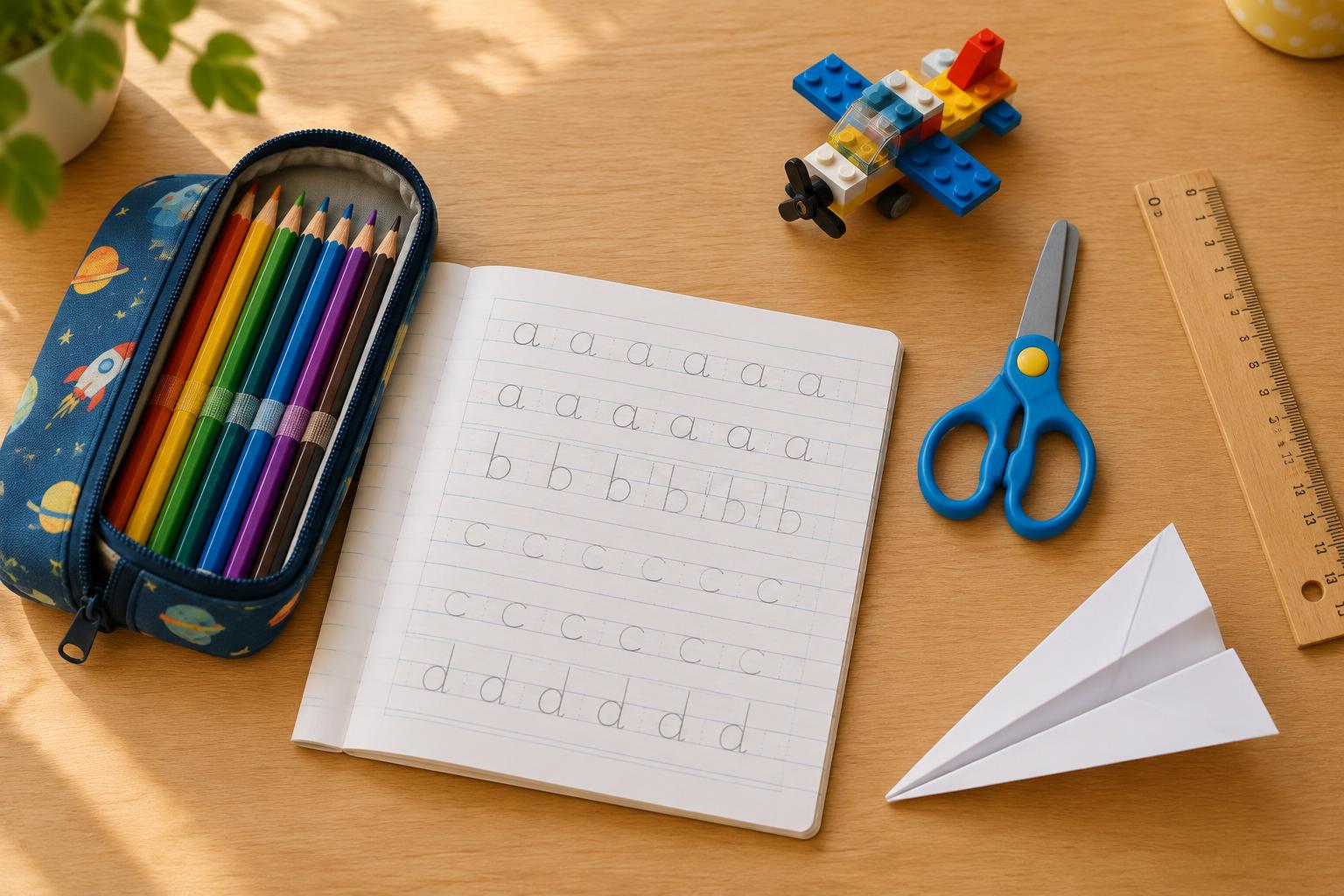
When parents first hear about the Artlytical Method®, they sometimes assume it is a drawing technique—a way to help children shade better or mix colours more accurately. It is not. Every Artlytical lesson is planned on a Design Matrix: five general stages, each pairing one Art Core skill with one Analytical Core thinking goal. The stages are fixed and general; the specific skills inside them are chosen for each child. Line control, for example, is one specific expression of the first stage, Visual Foundations—and the same stage also covers handwriting, cutting and careful copying. This article walks through all five stages and shows where each one reaches beyond the drawing page.
The Design Matrix: General Stages, Specific Skills
The distinction at the heart of this article is simple: the five stages of the Artlytical Method® are general, and the skills inside them are specific. 'Visual Foundations' is a general stage. 'Holding a pencil so a line lands exactly where you intend' is a specific skill within it. So is 'cutting along a curve with scissors' and 'writing letters that sit on the line'. One general stage, many specific expressions.
This matters because it changes what an art lesson is for. A child practising line control is not only learning to draw—they are strengthening a general capability that will serve them whenever their hand needs to do exactly what their mind decides. The drawing lesson is the training ground, not the destination.
It also means parents can choose the specifics. You know your child best: maybe handwriting is the priority this year, or careful planning before starting work, or the patience to check and revise. The stages stay fixed; which specific skills you watch for and encourage at home is up to you.
Stage 1: Visual Foundations
On the Art Core side, Visual Foundations means abilities like pencil control—identifying basic shapes and building controlled, confident lines. On the Analytical Core side, the same stage means analysing the design—breaking a subject down into its basic shapes, lines and proportions before drawing it.
Beyond drawing, this is the stage behind neat handwriting, accurate copying from the board, and careful cutting. The analytical habit—comparing what you made against what you intended—is the seed of checking your own work in every subject. A child who notices 'my circle is wider than the real one' is learning to notice 'my answer doesn't match the question'.
- Art Core: identify basic shapes, line control
- Analytical Core: visual comparison, noticing proportion errors
- Beyond drawing: handwriting, copying accurately, cutting, self-checking
Stage 2: Spatial Intelligence
On the Art Core side, children apply structure—grids, symmetry, the scaffolding that holds a picture together. On the Analytical Core side, they plan layouts and come to understand spacing and composition before committing to them.
Beyond drawing, spatial intelligence is the ability to judge how things fit and relate: will these pieces connect, is this tower balanced, does this paragraph fill the page sensibly? Children who plan a picture's layout before starting learn that thinking first is not slowness—it is how good work happens. That habit transfers directly to planning an essay, arranging a science display or packing a bag so everything fits.
- Art Core: apply structure—grids, symmetry
- Analytical Core: plan layout, understand spacing and composition
- Beyond drawing: planning before starting, judging fit and balance, organising space
Stage 3: Technical Mastery
On the Art Core side, children execute real drawing and painting techniques—shading, blending, brush control. On the Analytical Core side, they follow multi-step processes and analyse their own execution: which step went well, which drifted, and why.
Beyond drawing, this is the discipline of procedure. Following a recipe, a science experiment, a long-division method or a coding tutorial all demand the same thing: hold the steps in order, execute each one carefully, then analyse where the result diverged from the intention. Children who have analysed a failed wash in painting are noticeably less defeated by a failed attempt in other subjects—they know failure is data about a step, not a verdict on them.
- Art Core: execute drawing or painting techniques
- Analytical Core: follow process steps, analyse execution
- Beyond drawing: multi-step procedures, experiments, methods, learning from failed attempts
Stage 4: Expressive Refinement
On the Art Core side, children add texture, value and contrast—the layers that turn a correct drawing into a compelling one. On the Analytical Core side, they explain their choices and explore variations: why this colour, why this emphasis, what would change if I chose differently?
Beyond drawing, this is communication with intent. A child who can explain why they made something darker, bigger or brighter is practising the same muscle used to justify an answer in class, argue a point in writing, or present a project. Exploring variations—trying three versions before choosing—builds the flexibility that good problem-solvers rely on when the first approach doesn't work.
- Art Core: add texture, value and contrast
- Analytical Core: explain choices, explore variations
- Beyond drawing: justifying answers, presenting ideas, trying more than one approach
Stage 5: Insight & Articulation
On the Art Core side, children refine errors and reinforce techniques—returning to weak spots deliberately. On the Analytical Core side, they reflect, journal and take part in peer review: putting their own progress into words and learning to give and receive useful feedback.
Beyond drawing, this is metacognition—thinking about your own thinking—and it may be the most portable skill of all. A child who can say 'I rushed the background because I ran out of patience' can say 'I rushed the last ten questions because I was tired'. Reflection turns experience into improvement, and articulation turns private understanding into something teachers, friends and eventually colleagues can share.
- Art Core: refine errors, reinforce techniques
- Analytical Core: reflect, journal, peer review
- Beyond drawing: self-awareness, giving and receiving feedback, turning experience into improvement
Why Drawing Is Still the Best Training Ground
If these skills are so general, why practise them through drawing at all? Because drawing makes thinking visible. When a child plans a composition, the plan is on the page where teacher and child can see it and discuss it. When observation fails, the drawing shows exactly where. When refinement is skipped, the unfinished edge is right there. Few activities give such immediate, honest feedback.
Drawing is also safe to fail in. A wobbly line costs nothing; the child can reflect on it and try again. That low cost of revision is what lets the full matrix—foundations, structure, technique, refinement, reflection—run inside a single lesson, far more completely than in most schoolwork, where each attempt is graded.
So the method does not ask parents to choose between art and 'real' learning. The art lesson is where the general skills are exercised intensively, and the rest of life is where they are spent.
Choosing Your Child's Specifics
Because the stages are general, you can decide which specific skills to emphasise at home. Start from what your child actually needs this year. A five-year-old preparing for Primary 1 might focus on the Visual Foundations stage—pencil grip and controlled lines. An eight-year-old who rushes homework might focus on Insight & Articulation—checking and reflecting. A ten-year-old building DSA portfolio pieces might focus on Spatial Intelligence and planning.
The practical move is to name the stage, then pick one specific skill inside it and watch for it everywhere. If the stage is Visual Foundations, you might choose 'read the whole question before answering' as your specific skill—and praise it when it happens in maths homework just as you would in a drawing.
This is also how to talk with our teachers. Rather than asking 'is my child good at art?', ask 'which stage is my child working on, and which specific skills should we reinforce at home?' That conversation turns one weekly lesson into a whole week of quiet practice.
- Name the stage first, then choose one specific skill to watch for
- Pick specifics from your child's real needs this year—handwriting, patience, planning
- Praise the skill wherever it appears, not only in artwork
- Ask teachers which stage your child is working on, and reinforce it at home
See the Design Matrix at Work
The clearest way to understand how the Artlytical Method® reaches beyond drawing is to watch your child in a real lesson. Speak with our team about a trial class at one of our four Singapore studios.
Talk to Our TeamFrequently Asked Questions
Is the Artlytical Method® only about drawing?
No. Drawing is the training ground, not the destination. Every lesson is planned on a Design Matrix of five general stages—Visual Foundations, Spatial Intelligence, Technical Mastery, Expressive Refinement, and Insight & Articulation—each pairing an Art Core skill with an Analytical Core thinking goal. The same stages transfer to handwriting, maths, science and everyday problem-solving.
What are the five stages of the Artlytical Method® Design Matrix?
Visual Foundations (abilities like pencil control; analysing the design into shapes, lines and proportions), Spatial Intelligence (grids, symmetry, planning layout), Technical Mastery (executing techniques, following and analysing process steps), Expressive Refinement (texture, value, contrast, explaining choices), and Insight & Articulation (refining errors, reflection and peer review).
What does 'general stages, specific skills' mean?
Each stage is general—for example, Visual Foundations. Inside it sit many specific skills: pencil control, neat handwriting, careful cutting, accurate copying. The stages are fixed; which specific skills a family emphasises can be chosen based on the child's current needs.
How do I choose which specific skills to focus on?
Start from what your child needs this year. A child preparing for Primary 1 might focus on Visual Foundations—pencil grip and controlled lines; an older child who rushes work might focus on Insight & Articulation—checking and reflecting. Name the stage, pick one specific skill, and praise it wherever it appears—not only in art.
Why practise these skills through art rather than directly?
Drawing makes thinking visible and failure cheap. A plan, an observation error or a skipped refinement shows up immediately on the page, where teacher and child can discuss it, and a wobbly line costs nothing to revise. That lets the full matrix run inside a single lesson, far more completely than in graded schoolwork.
Which programmes at The Art People use this approach?
All of them. The Artlytical Method® and its Design Matrix run through our kids' art classes, toddler programme, sketching, and the Digital Tech Program including 3D design and animation—adjusted to each age and medium.
Sources & Further Reading
- The Art People: The Artlytical Method®
Our full description of the two pillars and their areas—the framework this article applies beyond drawing.
- Harvard Project Zero: Eight Habits of Mind
Background reading on studio thinking, including Develop Craft, Observe and Reflect. Not an evaluation or endorsement of the Artlytical Method®.